I have returned four automatic feeders in fourteen months. One jammed its auger in week two. Two portion wheels over-fed by a margin I could see on a kitchen scale. One app-connected unit stopped feeding entirely when the Wi-Fi hiccuped, and the cat it was supposed to feed skipped a meal until the owner called me from work. That history is why this comparison of automatic pet feeders and fountains reads less like a spec sheet and more like a list of failure points.
I sit pets and walk dogs in Pacific Beach for a living, and nothing goes into a client's kitchen until it has lived in my apartment first. That means it spends a month with Mochi, a tortoiseshell who tips still water on principle, and Tank, a 75-pound lab mix who inhales kibble like a shop vac and has learned to body-slam gravity feeders until they dump. Four products made this round: three feeders and one fountain, spanning a budget plastic dispenser, a veteran programmable unit, a Wi-Fi feeder paired with an app-connected fountain, and a ceramic fountain heavy enough to survive a cat with a grudge.
The short version: if you want feeding and drinking handled by one app, the PETLIBRO feeder and Dockstream fountain pair is what I would hand a client first. If a big dog eats like Tank, the PetSafe Smart Feed is the more forgiving feeder. If budget is the whole conversation, the WOPET earns a slot. And if your cat tips bowls, the iPettie Tritone ceramic fountain is the one that ends that game.
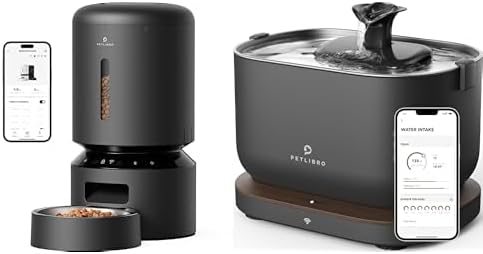
PETLIBRO Automatic Cat Feeder 5L + Dockstream Fountain
One app for both jobs, 5L hopper, wireless pump fountain you can carry to the sink
Wi-Fi dependency means the router becomes part of your pet's dinner plan
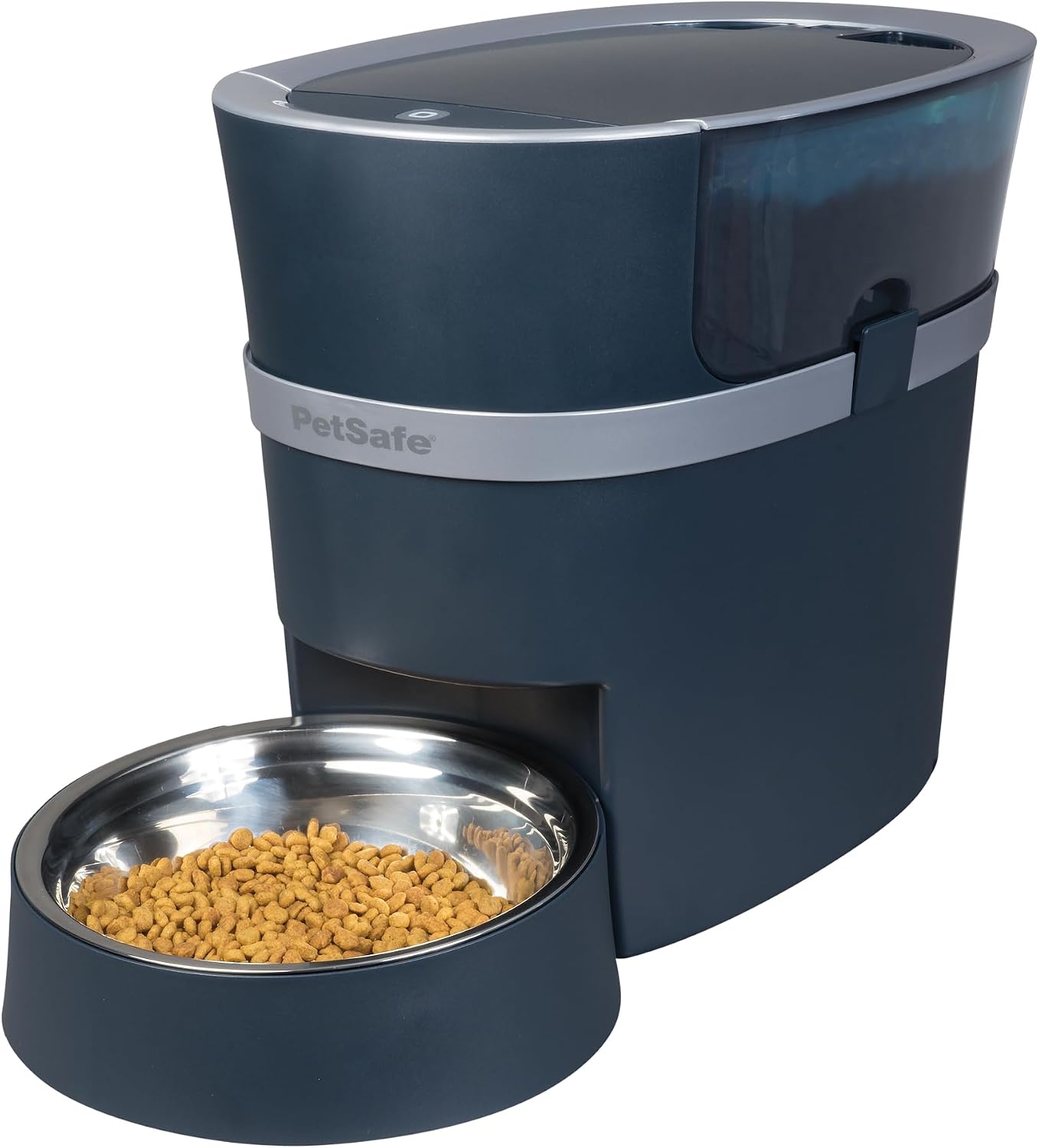
PetSafe Smart Feed Automatic Pet Feeder
6L capacity, programmable portions, the veteran that just keeps feeding
Bulky, and the app feels a generation behind
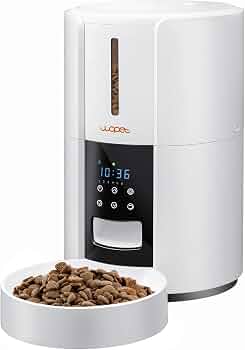
WOPET Automatic Cat Feeder 3L
Budget pick, 6 meals, voice recorder, battery backup
Plastic build, louder dispense, basic app
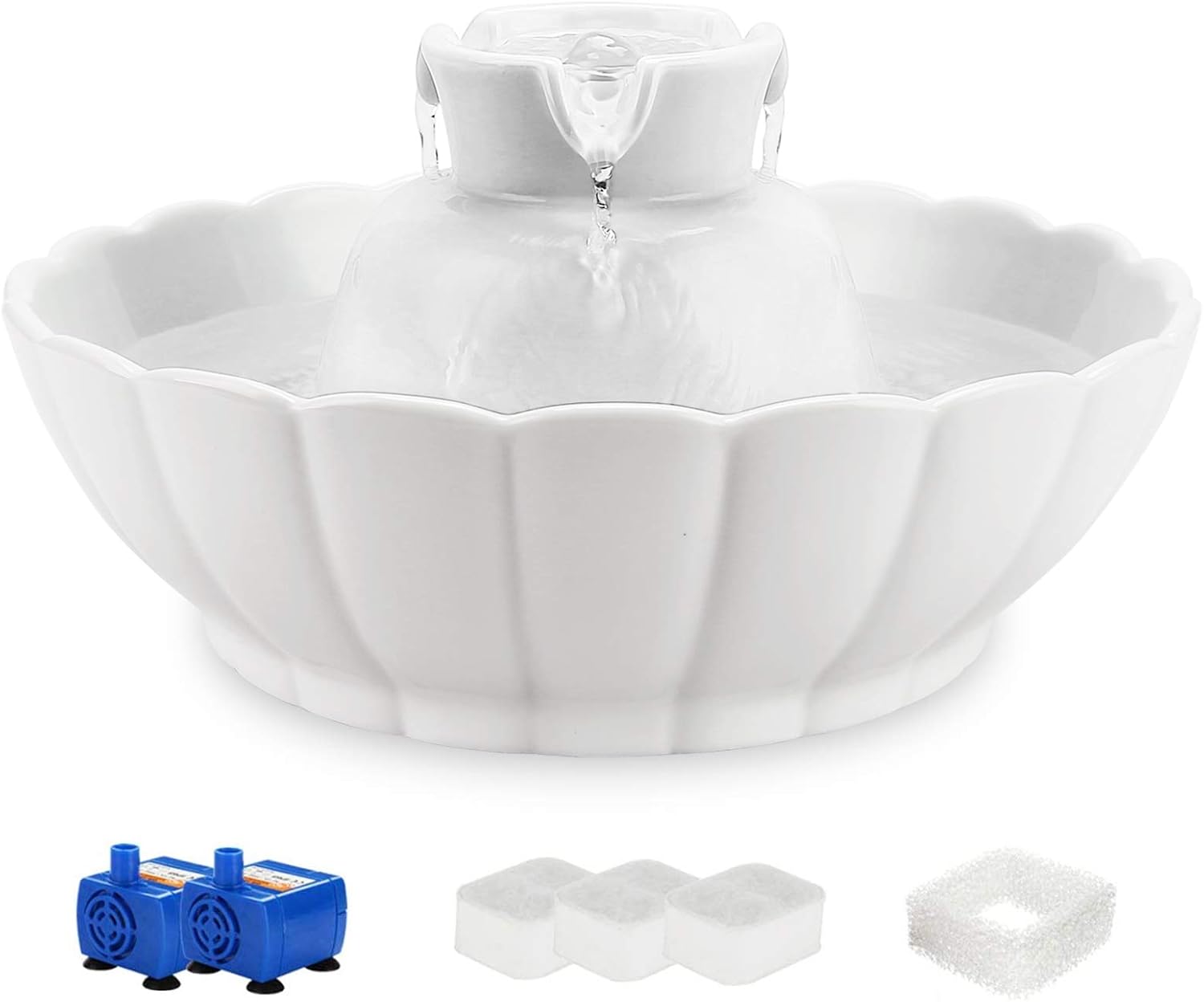
iPettie Tritone Ceramic Cat Water Fountain
Heavy ceramic body, hard for a cat to tip or slide
Heavy to clean, and ceramic does not survive a drop
Prices and availability were captured from Amazon Creators API and may change.
How I test feeders and fountains before a client sees them
Thirty days minimum, in my apartment, with my two animals. Not a weekend. Not a video unboxing. Thirty days is long enough for a cat to learn a lid latch and for a dog to learn which corner of a feeder gives when he pushes it.
The protocol is boring on purpose:
- I weigh delivered portions on a kitchen scale across the whole month instead of trusting the portion wheel once.
- I time a full teardown and clean, because a fountain I dread cleaning is a dirty fountain by Friday. My bar is five minutes for the pump and every crevice around it.
- I check what happens when the app dies, the Wi-Fi drops, or the battery backup takes over. A feeder that stops feeding when the router reboots is not a feeder, it is a subscription to anxiety.
- I listen to the dispense in a quiet room, because I take calls from the same desk.
- I hand the unit to Tank and count the days it survives.
None of that tells you which feeder has the prettiest product photo. It tells you which one still feeds on day 31, which is the only question that matters when a diabetic cat needs a meal at the same time twice a day. I learned that one from a client, not from a listing.
PETLIBRO feeder and Dockstream fountain: the app-first pair
The PETLIBRO set is the only option here that covers both jobs. The feeder holds 5L of kibble and connects over Wi-Fi, and the Dockstream fountain uses a wireless pump, both managed from the PETLIBRO app. That last detail is the one that interests me as a teardown guy. No cord running down into the water basin means you can lift the whole fountain to the sink without unplugging anything, and any design change that shortens the distance between "needs a clean" and "cleaned" is a health feature, not a convenience.
The app side is where I get skeptical. Two jobs in one app sounds tidy until the network drops and you realize both jobs now share a single point of failure. The auger is the product. The app is a feature. If the dispense mechanism jams, no amount of scheduling saves the meal, so what I want to see on any Wi-Fi feeder is a device that keeps its own schedule when the router hiccups and a portion wheel I can inspect without a screwdriver.
The pairing makes the most sense for one household with one cat or a small dog, where the owner travels and wants a low-water or empty-hopper alert on a phone. For a multi-cat house with a food thief, no app fixes that problem, and I would point you at a microchip feeder instead.
PetSafe Smart Feed: the boring veteran that keeps feeding
Boring is a compliment in this category. The PetSafe Smart Feed is programmable, holds 6L or about 24 cups, and has been the most reliable unit I have kept around the apartment. It is bulky enough that you notice it in a small kitchen, and the app feels dated next to anything with a modern design team behind it. It still feeds. That is the whole job.
For a dog like Tank, portion control is not a lifestyle upgrade, it is medical. A gravity feeder and a speed eater are a bad combination, because a dog that inhales kibble will inhale whatever the reservoir dumps, and the next stop is a vet bill or a bloat scare. A programmable feeder that delivers measured meals on a schedule is the difference between a routine and a free-for-all.
The trade-offs are real. You do not get a fountain in the same app, the footprint is large, and the interface will not win anyone over. What you get instead is the most predictable of the feeders here, which is what I want in a client's home when the owner is on a flight and cannot check a phone.
WOPET 3L: the budget feeder that earns a backup slot
The WOPET is the cheapest of the four and it does the core job: a 3L hopper, timed portion control across six meals, a voice recorder, and battery backup for when the power blinks. It is plastic, the dispense is louder than the others, and the app is basic. I keep one as a backup unit, and I have handed it to clients who want a feeder for a cat without spending veteran money.
The voice recorder is the underrated feature here. A short recording of the owner's voice at meal time does more for an anxious cat than any notification badge, and I have watched it pull a nervous foster cat to the bowl on the first night in a new house. Battery backup matters for the same reason. Power in San Diego is reliable right up until the afternoon it is not, and a feeder that forgets a meal because of a brownout has failed at the only task it had.
What I watch on budget units is the portion wheel and the auger tolerances, because that is where cheap feeders fail, usually in the second or third week rather than on day one. Buy it as a starter feeder or a backup, not as the unit you leave for a two-week trip.
iPettie Tritone ceramic fountain: the one Mochi cannot tip
Mochi tips water bowls deliberately. She watched me fill one too many times and decided still water was an insult. The iPettie Tritone is the fountain in this group that ends that argument, because a heavy ceramic body does not slide across a tile floor when a cat puts her shoulder into it.
Ceramic also does the boring health work. If your cat has chin acne, plastic is the usual suspect, and moving Mochi off plastic cleared hers up. Stainless steel does the same job, but stainless is light, and light is exactly what a bowl-tipping cat exploits.
The cost is on the cleaning side. Ceramic is heavy to lift, it is awkward to scrub around a pump, and one wrong drop during a weekly clean is a painful loss. I have broken ceramic in my own kitchen while cleaning it, which is why I now clean it in the sink with both hands and nothing else in the basin. Heavy ceramic is a durability win against the animal and a durability risk against you.
The trade-offs nobody puts in the listing
One ecosystem versus two devices. The PETLIBRO pair gives you one app and one schedule to think about, which is genuinely easier for a traveler. Two separate devices, a PetSafe feeder and an iPettie fountain, give you two failure points instead of one shared one. I lean toward separate devices for clients with complicated pets, because a problem with one does not take out the other.
App dependency is a design decision, not a feature. Every connected feeder here is a great product right up until the network is not. What I want to know before buying is whether the unit keeps feeding on its stored schedule with no Wi-Fi at all. If the answer is no, that is a dealbreaker for a client's house.
Portion control is the line between feeders and trouble. Gravity feeders are for grazing cats. A dog that eats like Tank needs measured meals or he needs a vet. Any feeder you buy for a speed eater should be programmable, and the bowl should not refill itself.
Cleaning time is the spec that decides everything. A fountain with a pump compartment you cannot see is a slime trap, and a fountain you avoid cleaning is a dirty fountain by Friday. Before you buy, ask how long a full teardown takes and whether you will actually do it weekly.
Return policy is part of the spec. I have returned four feeders. The units with easy returns cost me nothing but time, and the ones without cost me a hundred dollars and a lesson. Buy from somewhere that takes it back, keep the box for the first month, and run your own thirty-day test with your own animal. That beats any review, including this one.
What I'm testing next
I am in the middle of a longer round on portion accuracy across budget feeders, weighing every delivered meal on a kitchen scale for a full month to see which wheels drift. The WOPET is in that group. I am also watching how a fountain's pump holds up across repeated cleanings, because the pump is the part that fails quietly and the part most listings never mention. Results in a few weeks.
If you take one thing from this comparison: buy for the animal in your house, not the photo on the box. Mochi will test the fountain. Tank will test the feeder. Whatever survives them is worth your money.