Related: Best Slow Feeder Bowls for Dogs That Eat Too Fast
I have returned four automatic feeders in fourteen months. One had a jammed auger, two had portion wheels that over-fed, and one app-connected unit stopped feeding when the Wi-Fi hiccuped. That is the education behind this guide. An automatic pet feeder and water dispenser looks like the simplest purchase in the pet aisle, and it is the one I see fail most often, because the marketing photo shows a calm cat and the reality is a tortoiseshell named Mochi who tips water bowls for sport and a 75-pound lab mix named Tank who body-slams anything with a reservoir on top.
So this is not a list of the flashiest units. It is a guide to four feeders I would actually put in a home, plus the checks that separate a feeder that lasts a year from one that lasts a week. Two of these are for pets. Two are for the birds outside your window, which is a different job with different rules, and I will be clear about which is which.
The thread running through all four is the same: design for the animal, not for the photograph. A feeder a determined pet can break will be broken. A nectar feeder that is annoying to clean will be dirty by Friday. Start there and most of the decision makes itself.
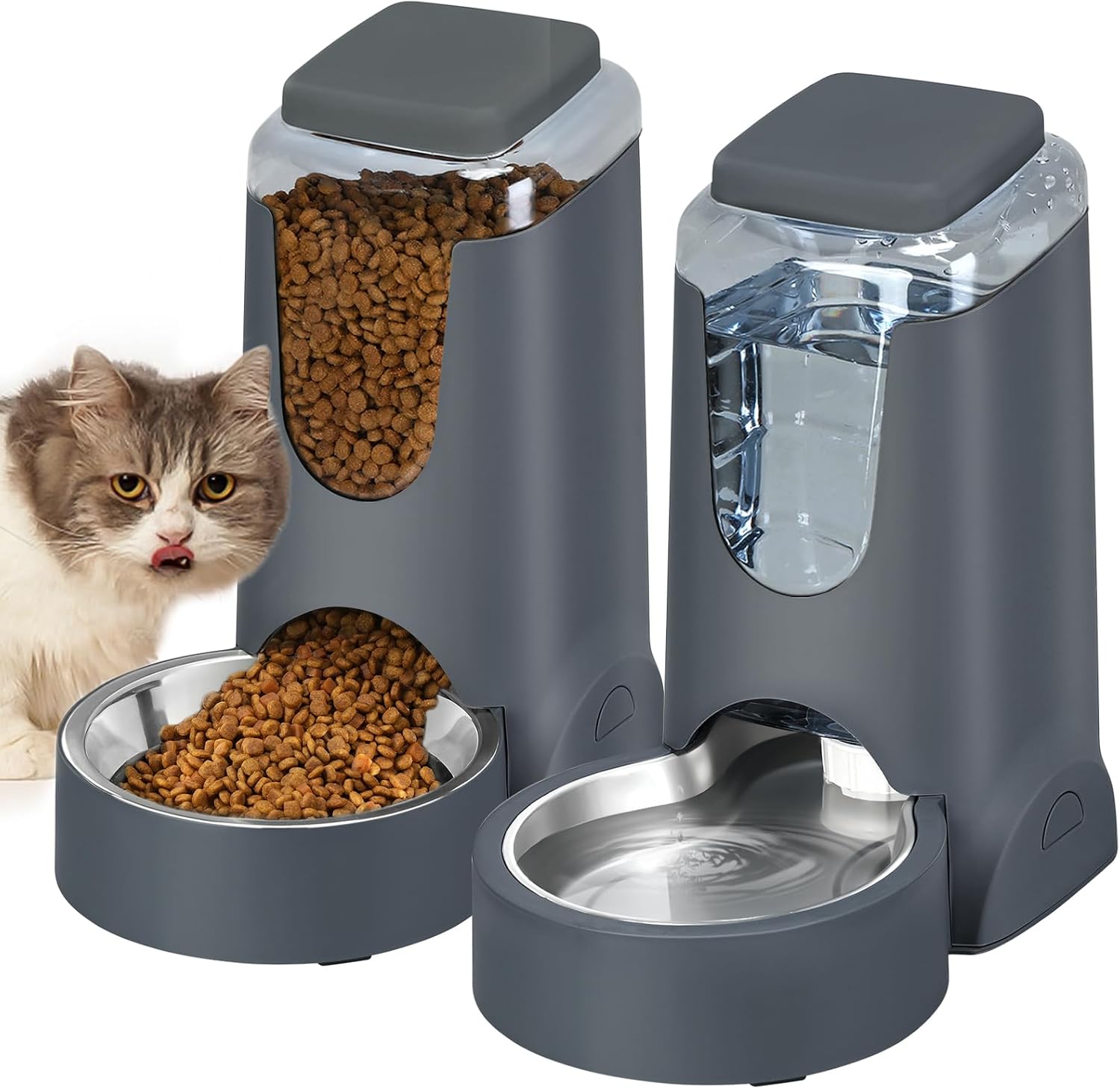
Best for Gravity Feeding: Automatic Cat Feeder and Water Dispenser with Stainless Steel Bowl
This is the one for the household that wants fewer refills and has a pet that can be trusted around an open bowl. It is a gravity setup: two 1-gallon reservoirs, one holding kibble and one holding water, with a stainless steel bowl in the mix. Nothing is programmed, nothing connects to Wi-Fi, and there is no app that can fail at 6 a.m. while you are still asleep.
The stainless steel part matters more than people give it credit for. Plastic is where chin acne shows up on cats, and I have watched a client's cat clear up after a switch to stainless. Stainless also does not hold onto smells the way plastic does, which matters a lot when a water reservoir sits out all day in a warm apartment.
The honest limit is the word gravity. The bowl refills itself, and that is exactly right for a grazing cat and exactly wrong for a dog that inhales food. Tank would empty a reservoir in one sitting and then stand there looking for more. Gravity feeders sold to speed-eating dog owners are one of my standing complaints, because the product is doing precisely what it was designed to do while the owner expects portion control it was never built to provide. If your dog eats fast, scroll down to the slow feeder bowl and let the cat keep the gravity unit.
For a two-cat household or a small dog that nibbles, this is a low-stress way to keep food and water available without a daily refill ritual. Check that both reservoirs seat properly when it arrives, clean both sides weekly, and keep the whole thing out of direct sun so the water stays palatable.
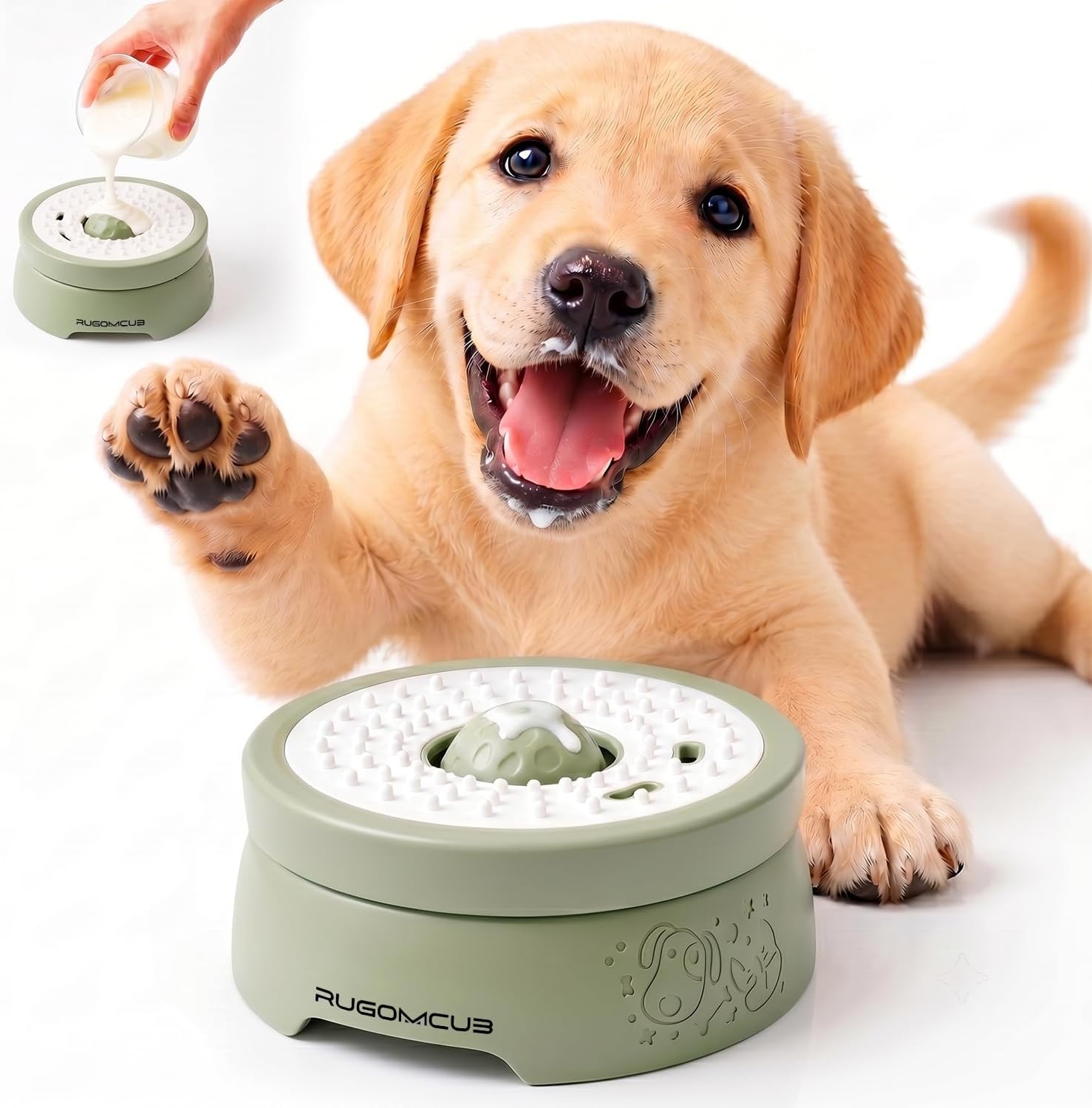
Best for Speed Eaters: Slow Feeder Dog Bowl, 2-in-1 (Grass Green)
If you have a dog like Tank, this is the cheapest upgrade in the entire guide. A maze style bowl forces the dog to work around obstacles for every mouthful, which turns a thirty-second meal into a few minutes of actual eating. That matters for two reasons. A dog that bolts food swallows a lot of air, and a dog that bolts food is finished and bored while you are still filling your own plate.
The 2-in-1 label is worth reading carefully on the listing, because that second configuration is the difference between a bowl you use every day and a bowl that lives in the back of a cabinet. The things I check on any slow feeder: can I get a sponge into every groove, does the base stay put when a 75-pound dog pushes it across the floor, and does the material survive the dishwasher. A slow feeder that is a pain to clean becomes a dirty bowl by Friday, and a dirty bowl is worse than a fast meal.
One thing I will say plainly. A feeder with a slow feed mode that dispenses one small meal a day is a diet plan, not a slow feeder. The bowl is cheaper, it works every single time, and it does not need batteries or a schedule. Grass green also means you can find it in a dim kitchen at 6 a.m., which is a small thing I appreciate more every year.
Best Backyard Feeder: Droll Yankees YCPD-90M Yankee Dipper Bird Feeder, 5 lb, Burgundy
Now we leave the pets behind. This one hangs outside for the birds, and it belongs in this guide because a lot of the same rules apply: capacity decides how often you refill, cleaning decides whether the food stays safe, and a feeder that is annoying to open stops getting filled.
The 5 lb capacity is the headline. That is a real amount of seed, which means fewer trips outside in the morning and fewer mornings where you skip it because it is drizzling. Droll Yankees has been making backyard feeders for a long time, and the burgundy finish reads as an outdoor piece rather than something that belongs on a shelf.
What I would watch is the schedule, not the capacity. Seed that sits through a wet stretch can clump and go sour, and a feeder this size holds enough that you can forget about it for too long. Empty it, wash it with mild soap and hot water, let it dry completely, then refill. If you have squirrels, expect them to test the hanger before they test anything else, and plan the pole or baffle accordingly.
Placement does more work than most people expect. Keep it a readable distance from the window glass, and away from wherever the cat sits, because a feeder that doubles as cat television ends badly for everyone involved.
Best for Hummingbirds: Birds Choice Best-1 Hummingbird Feeder, 32oz Nectar Capacity, Clear
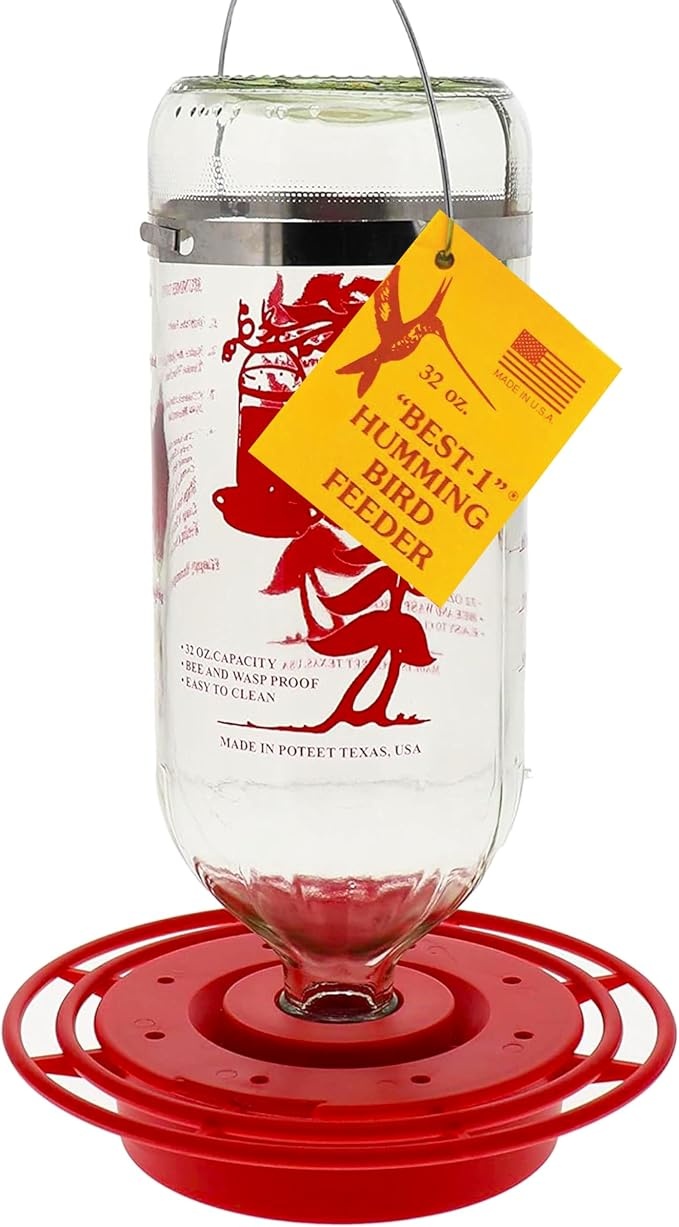
Thirty-two ounces of nectar is a lot for one hummingbird feeder, and that is the point: in a warm climate you can go a couple of days between fills instead of checking it twice a day. The clear body means you can read the level without taking the feeder apart, and you can see when the nectar starts to cloud, which is your signal that cleaning is overdue.
Nectar is a simple recipe: one part white sugar to four parts water. No red dye, no honey, no brown sugar. Red dye is a marketing habit rather than a hummingbird need, and the feeder itself carries the color. In San Diego heat, nectar ferments quickly. If the feeder sits in full sun, plan on changing it every other day in summer, because fermented nectar is the fastest way to make hummingbirds sick and to convince them to stop visiting.
Cleaning is the whole job with any nectar feeder. Warm water, a bottle brush, and a full dry before refilling. Ants and bees are the other issue: a moat or a guard on the port solves most of it, and moving the feeder a few feet when the ants find it usually breaks their trail for good.
How I evaluate any feeder before I recommend it
The rules are boring, and they are the reason I have returned four feeders. A feeder gets a full month in my apartment with Mochi and Tank before it goes into a client's home. A fountain or water dispenser gets recommended only if I can clean the pump and reservoir in under five minutes, because if it takes longer than that I will not do it weekly, and a dispenser that is not cleaned weekly is a bacterial soup with nice design.
Portion accuracy gets measured on a kitchen scale, never eyeballed. When a feeder claims a portion, I weigh what actually lands in the bowl across a month. A portion wheel that runs heavy adds up to a lot of extra calories over a year, and a portion wheel that runs light means a cat who is hungry and loud at 4 a.m.
I also want to know what happens when the extras fail. If the app goes down, does the feeder still dispense on schedule? If the power blinks, does it hold the schedule or forget it? A feeder that needs the cloud in order to feed your cat has a single point of failure, and the auger is the product, not the app.
And I read the return policy before I read the feature list. Four returns taught me that the return window is part of the spec, and the units with easy returns cost me nothing but time.
Analysis: what the words on the box actually mean
A hopper is the storage bin for kibble, and a sealed one keeps humidity, dust, and pantry moths out. An auger is the rotating screw that pushes kibble toward the dispense opening. It is the part that jams, and it is the reason cheap feeders fail. A portion wheel is the rotating compartment that meters serving sizes per meal, and accuracy there is the entire product. Dispense accuracy is how close the delivered portion is to the programmed grams, which is why I weigh every meal during a test instead of trusting the display.
A gravity feeder is a bowl with a reservoir on top that refills itself. Fine for grazers, dangerous for speed eaters. That single distinction explains most of the bad feeder reviews I read, because a product gets blamed for a job it was never built to do.
Material matters too. Stainless and ceramic beat plastic for cats prone to chin acne, and stainless holds up better to daily washing. In the backyard, capacity and ease of opening beat every decorative feature, because the feeder you actually refill is the feeder that gets used.
The feeder and water dispenser reference table
This is the short version I keep in my phone when a client asks what to order. Capacity and use case come straight from the product listing. Where a listing does not state a number I care about, I mark it as something to check yourself rather than guessing.
| Product | Best for | Capacity | Notes |
|---|---|---|---|
 Visit on Amazon → Visit on Amazon →Automatic Cat Feeder and Water Dispenser with Stainless Steel Bowl |
Grazing cats, small dogs, short trips | 1 gallon x 2 | Gravity feed, stainless bowl, no portion control |
 Visit on Amazon → Visit on Amazon →Slow Feeder Dog Bowl, 2-in-1 |
Dogs that eat too fast | See product | Check the second configuration on the listing |
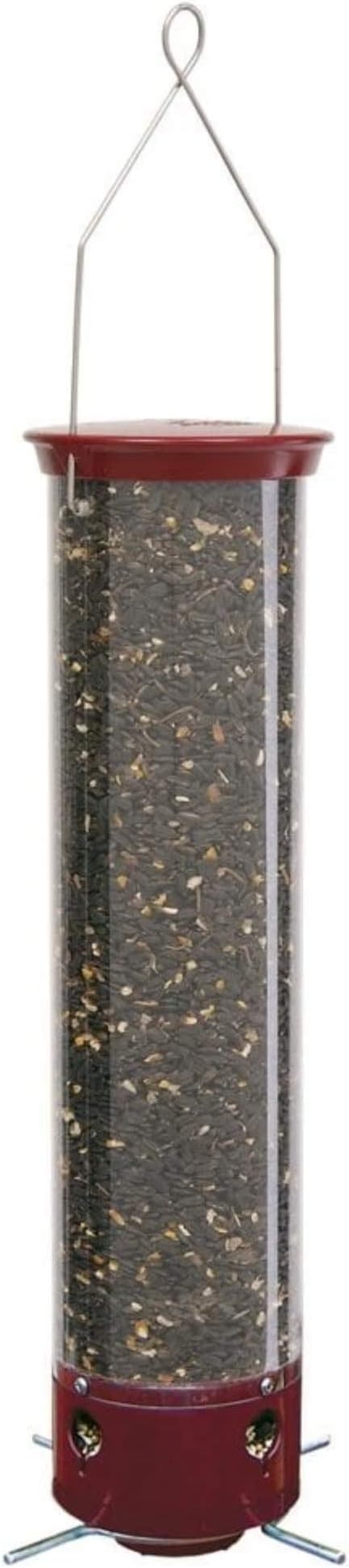 Visit on Amazon → Visit on Amazon →Droll Yankees YCPD-90M Yankee Dipper Bird Feeder |
Backyard seed eaters | 5 lb | Outdoor use, clean between fills |
| <img src="/images/products/B000PBXESO.jpg" alt="Birds Choice Best-1 Hummingbird Feeder | 32oz Nectar Capacity | Clear" width="340" style="border-radius:8px;max-width:340px;width:340px;height:auto;max-height:420px;object-fit:contain"> Birds Choice Best-1 Hummingbird Feeder |
Hummingbirds |
Should you buy the automatic cat feeder and water dispenser?
Yes, if your household wants fewer refills and your pet can be trusted around an open bowl. Two 1-gallon reservoirs cover a grazing cat for a good stretch, and the stainless steel bowl is the detail I would pay attention to, since stainless does not hold odors the way plastic does and it is kinder to a cat with chin acne.
Be honest about what it is not. There is no schedule, no portioning, and no app. It is a gravity system, and gravity systems are for grazers. If your dog eats like Tank, this is the wrong product for the dog and the right product for the cat.
Should you buy the slow feeder dog bowl?
Yes, and it is the best value in this guide. It needs no power, no schedule, and no app, and it does the one job that matters for a fast eater: it makes the meal take longer. Check the 2-in-1 configuration on the listing before you buy so you know which setup you are getting, and confirm you can get a sponge into every groove.
Should you buy the backyard feeders?
Buy the hummingbird feeder if you want birds at the window and you are willing to commit to a cleaning schedule, because nectar in summer heat does not wait for you. Buy the Droll Yankees feeder if you want seed feeding with real capacity and fewer refill trips. Neither one belongs in the house, and neither one is a pet product. They are a different hobby that happens to use the same word.
The bottom line
Match the feeder to the animal. A grazer gets the gravity setup with the stainless bowl. A speed eater gets the slow feeder bowl. The birds get the two outdoor feeders, cleaned on a schedule. Every one of those decisions comes down to the same question I ask about every unit that comes through my apartment: when the pet pushes back, does the design hold, or does it dump?