Every bowl of still water in my apartment is an insult to Mochi. She is a tortoiseshell with strong opinions, and a while back she decided that a bowl I had just filled was a personal challenge, so she hooks a paw under the rim and flips it. That is how I ended up running a filterless cat water fountain setup in my own kitchen and setting up the same kind of unit in client homes across Pacific Beach.
Here is the short version of what I learned. A filterless fountain is not automatically the cheaper fountain. It is a fountain that trades a filter subscription for a cleaning habit. If you will actually pull the pump and rinse it once a week, you save money and you never get stuck waiting on a filter delivery. If you will not, buy a filtered unit and set a phone reminder, because a fountain nobody cleans is just a bowl with a motor in it.
This guide covers placement, first-run setup, the cleaning schedule that survives a real week, and what to do when your cat still refuses to drink out of it.
Why you should trust me
I have been pet sitting and walking dogs in Pacific Beach for eight years, with a client list that hovers around 60 households. I have watched a diabetic cat miss a meal because a feeder jammed, and I have watched a cat stop drinking entirely because nobody rinsed the fountain and the water went slimy. Those two things shaped how I judge every water source I put in a client home.
At home I run a torture chamber. Mochi tips bowls on purpose. Tank is a 75 pound lab mix who treats every cord in the house as a chew toy and inhales kibble like a shop vac. Anything that survives both of them for a full month is worth recommending to somebody else. I have returned four automatic feeders in 14 months, and I apply the same suspicion to fountains.
How I picked and how I tested
The two products below fit this guide: a fountain to set up, and, for anyone still running a filter based unit, the replacement filters that keep that one alive. My criteria for a fountain are boring and specific.
First, can I get to the pump without tools or swearing? A hidden pump compartment is a slime trap. If I cannot see the impeller, I will not clean it as often as I should, and neither will you. Second, how long does a full teardown take? My rule is five minutes. If cleaning takes fifteen, the fountain gets skipped on a busy Tuesday and the cat pays for it. Third, can the animal tip it or break it? Mochi has flipped bowls I would have sworn were stable.
For filters, the question is simpler. Do they seat properly in the fountain you already own, and are they easy to rinse between swaps? A filter that does not seal lets water bypass it completely, which means you are paying for a filter and getting nothing.
What you need before you start
You can set up a fountain with nothing but the unit, water, and a sponge. The choice that matters is whether you are going filterless or filtered, because that decision sets your weekly workload for the life of the product.
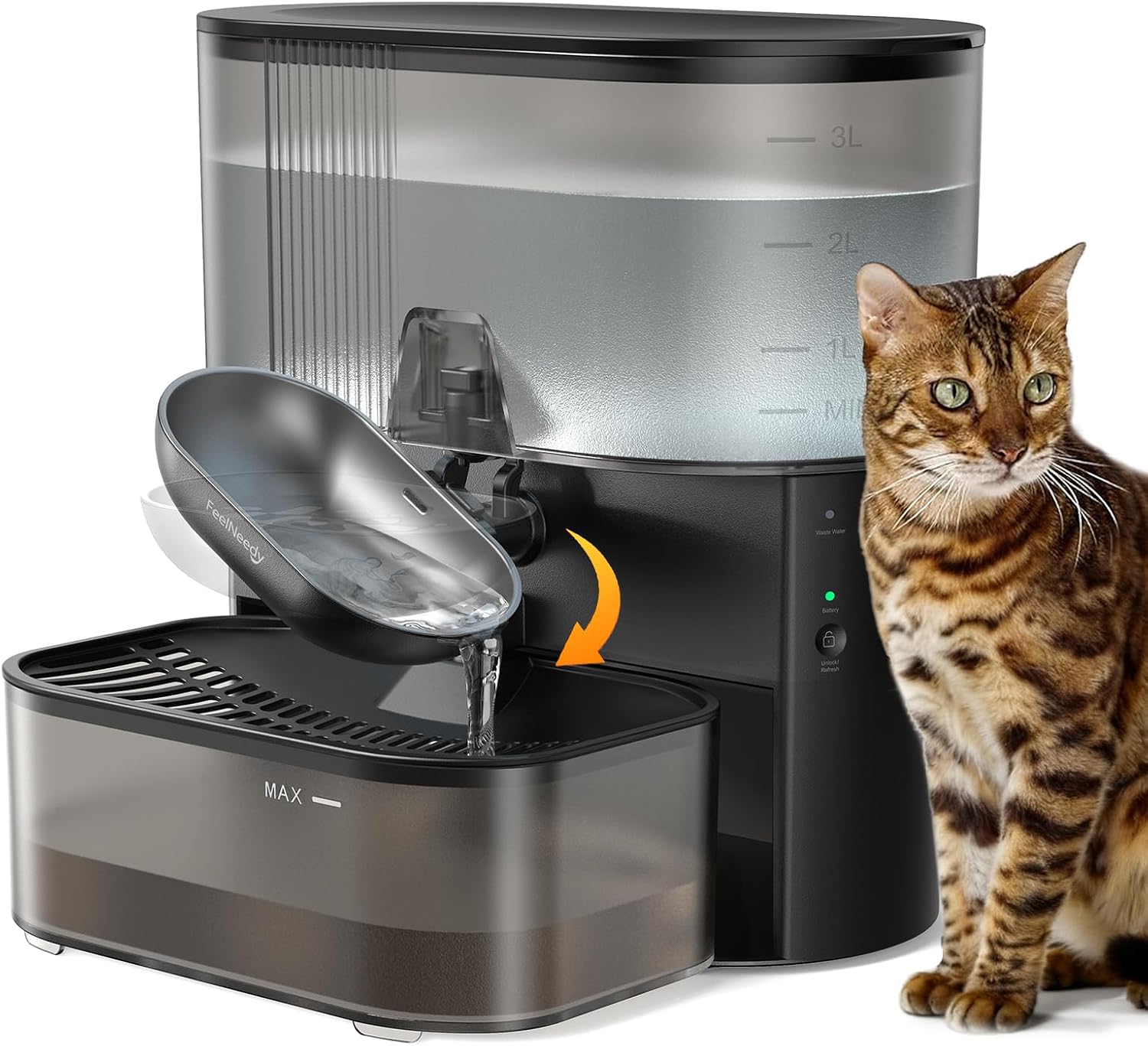
Our pick: Wireless Cat Water Fountain No Filters, Wastewater Separation, FEELNEEDY Stainless Steel Bowl, 3.5L Pet Water Fountain for Cats & Dogs Dispenser, Black
 Visit on Amazon →
This is the unit this guide is built around, and three things in the name actually matter: no filters, wastewater separation, and a stainless steel bowl.
No filters means no consumable to buy, no filter to forget, and no soggy filter sitting in the basin going funky between changes. You are the maintenance schedule, which is the whole trade. Wastewater separation means the water your cat drinks is not the same water that just ran through the pump and picked up hair and kibble dust on the way. The drinking surface stays cleaner between cleanings, and that buys you slack on a busy week. Stainless steel is the part I care about most, because plastic bowls scratch, scratches hold biofilm, and biofilm is what gives cats chin acne and gives your kitchen that fountain smell. I moved Mochi off plastic for exactly that reason.
The 3.5 liter capacity is a multi-cat, weekend-away number. In a one-cat house you are topping off every few days instead of every day. Wireless matters more than people expect, because the alternative is a power cord stretched across a kitchen floor, and I have watched a dog chew through worse than that.
Flaws but not dealbreakers: Filterless means you own the water quality. If you are the kind of person who cleans something when it finally looks dirty, a filter fountain is a better fit for you and there is no shame in admitting it. A full 3.5 liter basin is also heavy, so decide where it lives before you fill it, not after.
Check current Amazon price before you commit, and read the setup steps below before you fill it for the first time.
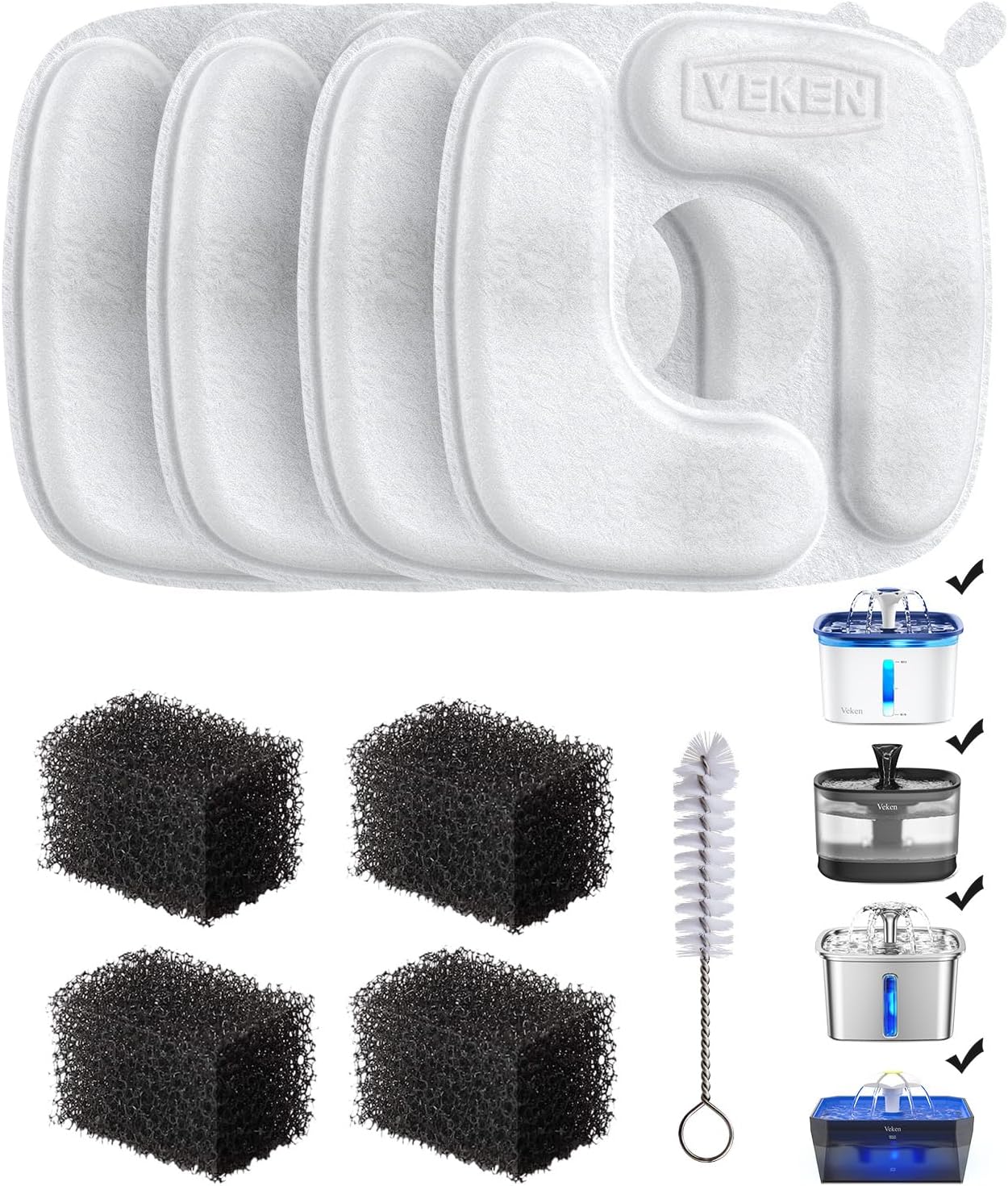
Filter refills: Veken Cat Water Fountain Filters, 4 Pack Replacement Filters
 Visit on Amazon →
The fountain above does not use these, and I want to be direct about that. These are replacement filters for Veken's filter based fountains. They belong in this guide for one reason: plenty of people read a filterless setup guide because they are tired of buying filters, and plenty of people go the other direction, buying a filtered fountain because they know in their heart they will not clean a filterless one weekly.
If you already run a Veken fountain, this is the consumable that keeps it running. Filters trap hair, dust, and kibble crumbs before they reach the pump, which extends pump life and keeps the water tasting neutral instead of like a pond. A four pack gives you a buffer so you are not ordering in a panic the day the water starts smelling off.
Two things to check before you buy. Confirm the filter shape matches your fountain model, because fountain filters are not universal and a filter that does not seat properly lets water bypass it entirely. Rinse a new filter under cold water before it goes in, because a dry filter can cloud the water for the first few minutes.
Rinse the filter in the sink between changes too. A rinsed filter is not a fresh filter, but it buys you a few extra days in a pinch.
The setup, step by step
Step one: Choose the spot before you unbox anything. Cats in the wild do not drink where they eat, and a lot of house cats carry that instinct. Put the fountain away from the food bowl, well away from the litter box, and on a surface that can handle a spill. If you have a dog who runs a daily patrol route through the kitchen, get the fountain out of that path. Cordless helps here, because you are not stuck negotiating with the nearest outlet.
Step two: Rinse everything cold. New stainless and new plastic both carry manufacturing dust. Warm water and a soft sponge, no soap residue left behind. Skip the dishwasher unless the maker says otherwise, since heat can warp a basin seal.
Step three: Fill it to the marked line. A pump that runs dry gets loud, then gets hot, then stops working. Never let the water drop below the minimum mark, and if you travel, either size up the basin or ask someone to top it off mid-trip.
Step four: Run it for ten minutes before your cat sees it. Cats are neophobic, which is a fancy way of saying new things are suspicious. Let the unit settle, listen for rattles, and check that the flow is steady before you present it.
Step five: Introduce it next to the old bowl. Keep both water sources for at least a week. Do not remove the old bowl the same day you plug in the new one, or you turn a curiosity into a standoff.
Step six: Watch the first drink, then back off. Some cats investigate within an hour. Others need a week. Mochi ignored the first fountain I brought home for two days and then acted like it had always been there. If your cat stares at it from across the room, that is normal. Do not hover.
Step seven: Lock in a cleaning cadence before week two. This is the step people skip, and it is the step that decides whether the fountain helps your cat or makes them sick. Daily top off. Every other day, a quick basin rinse. Once a week, a full teardown. Once a month, a descale.
Step eight: Reassess after two weeks. If your cat is drinking more, keep the routine. If your cat is still avoiding it, change one variable at a time: move it, lower the flow, or try a different bowl material. Changing three things at once tells you nothing.
The weekly teardown, in five minutes
This is the whole reason a filterless fountain works. Do it on a fixed day, the same way you take out the trash, so it stops being a decision.
Unplug or power down the unit. Lift the bowl and the basin off the base. Pull the pump, open the impeller cover, and rinse the impeller and the housing under warm water with your fingers or a soft brush. Run warm water through the basin and wipe the inside with a sponge. Reassemble, refill, and you are done.
Once a month, soak the pump housing and any hard water film in a mix of white vinegar and water for twenty minutes, then rinse thoroughly. Our tap water runs hard here, and scale builds on the impeller faster than people think. A scaled impeller spins slower, moves less water, and eventually seizes.
If your fountain has a pump compartment you cannot see into, this routine takes twice as long and you will do it half as often. That is not a personality flaw. That is a design problem, and it is why I check pump access before anything else.
Troubleshooting the common problems
Your cat still tips the bowl. Heavier base, wider footprint, or a corner placement against two walls. Some cats tip because they want running water, and a fountain solves that. Some cats tip because knocking things over is fun, and for those cats you want weight and a broad base.
Your cat will not drink from it. Check the water level first, then the pump. A gunked impeller means weak flow, and weak flow reads as stagnant water to a cat. After that, try moving the fountain away from food and litter, and try a stainless drinking surface if you are running plastic.
The fountain is louder than it was. That is almost always water level or a dirty impeller, in that order. Top it off, then clean the pump.
Chin acne or a smell in the room. Both are biofilm problems. Switch off plastic if you have not already, and do the weekly teardown on schedule instead of when you notice.
The water tastes off to you. Change the water fully rather than topping off for a week straight. Topping off forever concentrates whatever is in the basin, and your cat notices before you do.
What this costs to run
The filterless unit has no consumable cost at all. Your expense is time: about five minutes a week plus a monthly vinegar soak. The filtered route costs a filter pack every few weeks, and the pack above is the kind of thing you buy in a four pack so you are never caught short.
Check current Amazon price on the fountain and on the filters before you decide, and compare that against what you spend on filters over a year. If you are honest with yourself about whether you will clean a fountain weekly, the math answers itself.
The setup is 20 minutes. The habit is the hard part, and the habit is what keeps your cat drinking. Mochi drinks more from moving water than she ever did from a bowl, and she has not tipped a fountain yet. That is the closest thing to a five star review I can give.